
During the last week of May Michal, the polish volunteer, and me decided to
vist Bandung.
Bandung is a city in West Jawa and it is very famous for the food. It is called "Paris of Jawa". I
don't know why they call it Paris of Jawa, maybe because it is a fresh and
fashion city when you can buy a lot of clothes in outlets in Ciampellas Street.
But really, believe me, there are not outlet prices. You can find other places
in other cities with cheeper clothes than in Bandung, but the people spend a lot of money there. It's
crazy!

To spend the night I recommend you two hostels: by Moritz and Gado-Gadu. This hostels are in the same street, near the train's station. The hostels are very cheap and with nice and helpfull staff.
Around Bandung there are some natural areas like Volcano Tangkuban Perahu, Hotsprings and waterfalls in Ciater of Gunung Dago, Tea plantations... But we did not visit this places. We spend two days in Bandung walking in the city looking for a tend (that it is imposible to buy...) because we wanted to have a trip on the mountains in Purwakarta. But unfortunately or fortunately (I do not know), we changed our planes and we decided to go to Cibodas.
Durante la última semana de mayo, Michal (voluntario de Polonia) y yo, decidimos visitar Bandung.
Bandung es una ciudad situada en el Oeste de Java y es muy famosa por su comida. Se hace llamar "Paris de Java". En realidad no sé por qué la llaman así, puede que porque el clima es más fresco y es una ciudad moderna donde puedes comprar un montón de ropa en los outles de la calle Ciampellas. Pero de verdad, creedme, ahí no hay precios de outlet. Puedes encontrar precios más baratos en cualquier tienda de cualquier otra ciudad, pero aún así la gente gasta un montón de dinero allí.
Para pasar la noche en Bandung, os recomiendo el hostal by Moritz y el hostal Gado-Gadu. Están en la misma calle, cerca de la estación de tren. Son buenos hostales, baratos y muy buen trato con el personal allí trabajando.
Alrededor de Bandung hay varias áreas naturales como el Volcán Tangkuban Perahu, aguas calientes y cascadas en el Cráter de la montaña Dago, plantaciones de té... Pero nosotros no visitamos esas áreas. Sólamente pasamos dos días en Bandung caminando por la ciudad y buscando una tienda donde poder comprar una tienda de campaña (imposible para nosotros encontrarla) porque queríamos pasar unos días en las montañas de Purwakarta. Pero por fortuna o no... cambiamos nuestros planes y decidimos visitar Cibodas.
To spend the night I recommend you two hostels: by Moritz and Gado-Gadu. This hostels are in the same street, near the train's station. The hostels are very cheap and with nice and helpfull staff.
Around Bandung there are some natural areas like Volcano Tangkuban Perahu, Hotsprings and waterfalls in Ciater of Gunung Dago, Tea plantations... But we did not visit this places. We spend two days in Bandung walking in the city looking for a tend (that it is imposible to buy...) because we wanted to have a trip on the mountains in Purwakarta. But unfortunately or fortunately (I do not know), we changed our planes and we decided to go to Cibodas.
Durante la última semana de mayo, Michal (voluntario de Polonia) y yo, decidimos visitar Bandung.
Bandung es una ciudad situada en el Oeste de Java y es muy famosa por su comida. Se hace llamar "Paris de Java". En realidad no sé por qué la llaman así, puede que porque el clima es más fresco y es una ciudad moderna donde puedes comprar un montón de ropa en los outles de la calle Ciampellas. Pero de verdad, creedme, ahí no hay precios de outlet. Puedes encontrar precios más baratos en cualquier tienda de cualquier otra ciudad, pero aún así la gente gasta un montón de dinero allí.
Para pasar la noche en Bandung, os recomiendo el hostal by Moritz y el hostal Gado-Gadu. Están en la misma calle, cerca de la estación de tren. Son buenos hostales, baratos y muy buen trato con el personal allí trabajando.
Alrededor de Bandung hay varias áreas naturales como el Volcán Tangkuban Perahu, aguas calientes y cascadas en el Cráter de la montaña Dago, plantaciones de té... Pero nosotros no visitamos esas áreas. Sólamente pasamos dos días en Bandung caminando por la ciudad y buscando una tienda donde poder comprar una tienda de campaña (imposible para nosotros encontrarla) porque queríamos pasar unos días en las montañas de Purwakarta. Pero por fortuna o no... cambiamos nuestros planes y decidimos visitar Cibodas.

Cibodas is a little village on the mountains where you have access to
Taman Nasional Gunung Gede Pangrano (Gede Pangrano National Park), and also
access to Botanical Park. There is a very famous hostal in internet from other tourist (Freddy's Homestay 200.000IDR/room sharing toilet), but more
expensive than others. The only advantage that Freddy's homestay have is that
Freddy can speak in english. But if you have some knowledges about bahasa
indonesia or a good diccionary, you can spend the night in one of a lot of
"Villa" (120.000IDR/room with private toilet). You will find them also on the road to the National Park entrance, and you will pay almost half
price. The last option is my recommendation, now if you want to choose one place, up to
you!
Cibodas es una pequeña ciudad en las montañas por donde tienes acceso al Parque Nacional Montaña Gede Pangrano y también acceso al Parque Botánico.
En cuanto a alojamiento, en internet puedes encontrar el hostal Freddy's Homestay (200.000IDR/habitación con baño compartido), es muy famoso por los turistas pero casi el doble de caro que otros. La única ventaja es que Freddy puede hablar ingles. Pero si tienes básicos conocimientos de bahasa indonesia, puedes pasar las noches en alguna de las Villas (120.000IDR/habitación con baño privado). Éstas las encontrarás en la misma carretera que llega a la entrada principal del Parque Nacional y del Parque Botánico. Esa es mi recomendación. ;)
Cibodas es una pequeña ciudad en las montañas por donde tienes acceso al Parque Nacional Montaña Gede Pangrano y también acceso al Parque Botánico.
En cuanto a alojamiento, en internet puedes encontrar el hostal Freddy's Homestay (200.000IDR/habitación con baño compartido), es muy famoso por los turistas pero casi el doble de caro que otros. La única ventaja es que Freddy puede hablar ingles. Pero si tienes básicos conocimientos de bahasa indonesia, puedes pasar las noches en alguna de las Villas (120.000IDR/habitación con baño privado). Éstas las encontrarás en la misma carretera que llega a la entrada principal del Parque Nacional y del Parque Botánico. Esa es mi recomendación. ;)
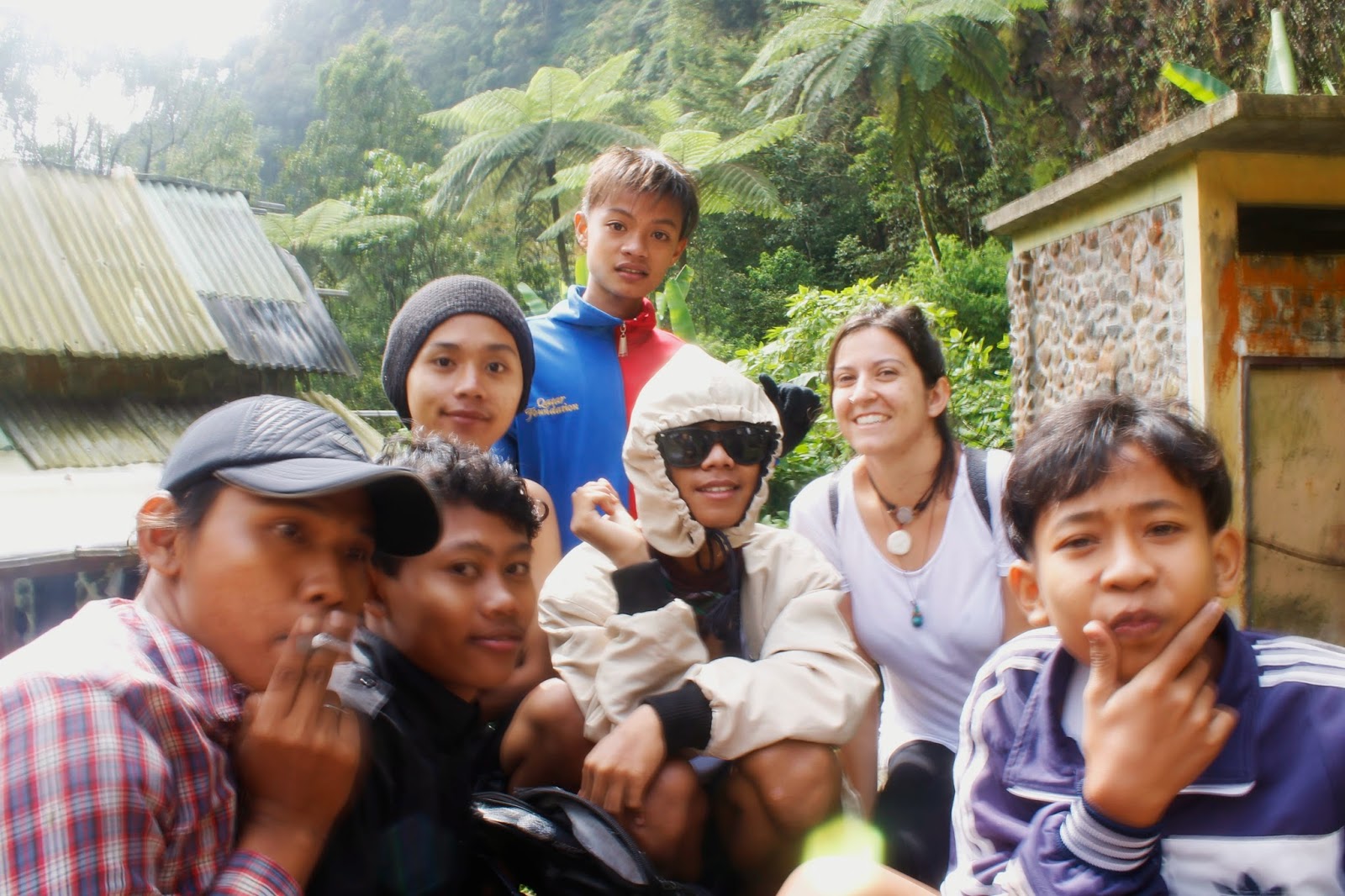 The first day in Cibodas, we went to the waterfall and hotspring in Gede
Pangrano National Park. It is a very touristic place, but you only will find
people the first hour of the trip. This people go to the waterfall.
The first day in Cibodas, we went to the waterfall and hotspring in Gede
Pangrano National Park. It is a very touristic place, but you only will find
people the first hour of the trip. This people go to the waterfall.
After visiting the waterfall you
can continue your way until the top of the mountain (aroun 8 - 10 hours
walking) or stop in the hotspring on the way. It is very usual to find people with big backpacks who want to go up and sleep on the way. We had
to resign ourselves to spending a few minutes in the hotspring, and taking a hot bath
there! When we came back, we ate a nasi goreg for dinner. But it was not especally delicious... I was sick this night and the next days also Michal.
El primer día en Cibodas, fuimos a la cascada y aguas calientes en el Parque Nacional Gede Pangrano. Es un lugar bastante turístico pero lo bueno es que sólo encuentras gente de camino a la cascada (1 hora caminando). Después de visitar la cascada, puedes seguir la ruta hasta la cima de la montaña ( 8 horas más o menos caminando)o parar en las aguas calientes de camino a la cima. Es normal encontrar gente con mochilas grandes portando sacos de dormir y tiendas de campaña, pues se puede acampar en la cima y ver un bonito amanecer. Pero nosotros, después de un calentito baño en aguas calientes, regresamos al pueblito.
Ya en el pueblo, cenamos nasi goreng (arroz frito). Pero por desgracia ese nasi goreng no estaba muy bueno y yo me puse mala esa noche y los días siguientes también Michal.
 |
| Photo taken by Michal |
El primer día en Cibodas, fuimos a la cascada y aguas calientes en el Parque Nacional Gede Pangrano. Es un lugar bastante turístico pero lo bueno es que sólo encuentras gente de camino a la cascada (1 hora caminando). Después de visitar la cascada, puedes seguir la ruta hasta la cima de la montaña ( 8 horas más o menos caminando)o parar en las aguas calientes de camino a la cima. Es normal encontrar gente con mochilas grandes portando sacos de dormir y tiendas de campaña, pues se puede acampar en la cima y ver un bonito amanecer. Pero nosotros, después de un calentito baño en aguas calientes, regresamos al pueblito.
Ya en el pueblo, cenamos nasi goreng (arroz frito). Pero por desgracia ese nasi goreng no estaba muy bueno y yo me puse mala esa noche y los días siguientes también Michal.
 |
| Photo taken by Michal |
The second day in Cibodas, we tried to visit the Botanical Park, 125
hectareas of forest and beautiful gardens, but it was imposible. I did not have
enough power to walk, and we only took a rest in a quiet place under the
eucalyptus trees. I hope I can return somewhen.
El segundo día en Cibodas, intentamos visitar el Parque Botánico de aproximadamente 125 hectáreas de bosque y preciosos jardines, pero fue imposible. Tras la mala noche que pasé no tenia suficiente energía para caminar y sólo descansamos bajo algunos árboles de eucalipto. Espero poder regresar algún día.
The next stop in our trip was Bogor. This city I really liked. It's fresh, clean and full of nature. Near the famous Botanical Garden, you can find the best homestay in all Indonesia I think. In Tom's Homestay you feel like at home, but with one very smart man that knows all about the country, especially about National Parks, mountains and volcanos in each island of Indonesia. Michal defined him like an angel, and it is true. If you have the opportunity to meet him, do it, you will see why.
 La siguiente parada fue Bogor. Realmente me gustó esta ciudad. El clima es fresco, y es una ciudad limpia y llena de naturaleza. Tiene un bonito Jardín Botánico y muy cerca de él, podría decir que se encuentra el mejor Homestay de todo Indonesia. En Tom's Homestay te sientes como en casa, pero con un muy inteligente hombre que sabe de todo acerca de su país, especialmente sobre Parques Nacionales, montañas y volcanes de cada isla de Indonesia. Michal le definió como un ángel, y es verdad. De verdad que si tienes oportunidad de conocerlo, hazlo, ya verás por qué.
In Bogor we walked a lot around the city, but we were too weak to
do more things. The second day I went to Pura Agung Jagatkartha, an Hindu
Temple at the foot of the Salak mountain. It was a very especial experience. I
took an ankota (the small blue bus) and I walked almost 30 minutes until I arrived to this Temple.
There I was looking the people prayin and after I was invited by them to have
a baliness lunch! It was delicious!
After, I could to entry to the temple, and I thought it was a good idea to buy some inciense sticks to give in the altars. I went to the shop (one
house where one women sells these inciense sticks). After paying, I heard a man
asking me: "Do you want a coffee or tea?" I stopped and I though
"why not?". They invited me to take one sweet tea and I had a very interesting and funny conversation with very interesting
people like Mister Made, Mister Gun and Laksmi.

Mister Made is the boss of the house and who take care of the small
temple near his house. Mister Gun, he is truelly a good person. I think if you are alone in
one interesting place and you understand nothing, he will appear to help and
explain you all that you want to know. Laksmi from Jakarta is a very nice and extrovertive girl who want to talk with you not only to practise
her english, interested in other cultures and to help you.
En Bogor caminamos un montón por la ciudad porque estábamos demasiado cansados como para hacer más cosas. El segundo día, Michal se quedó descansando y yo decidí visitar el Templo Hindú Pura Agung Jagatkartha, situado a los pies del monte Salak. Fue realmente una experiencia muy especial. Tomé una ankota (pequeño bus azul) y caminé alrededor de 30 minutos cuesta arriba hasta llegar al templo. Allí estuve observando cómo la gente rezaba y tras la ceremonia fui invitada a comer con ellos comida balinesa (con cerdo!)
 Después podía entrar al templo, pero pensé que sería una buena idea si compraba incienso para ponerlo en los altares. Así que fui a la tienda (una casa donde la mujer vende incienso. Cuando pagué y me decidía a volver al Templo, escuché a un hombre preguntándome: "Quieres un café o un té?". Paré en seco y pensé: Por qué no?. Me invitaron a tomar un te (y los que quisiera) y tuve una muy interesante y divertida conversación con muy interesantes personas como Mister Made, Mister Gun y Laksmi.
Mister Made es el dueño de la casa y quien cuida el pequeño templo que hay al lado de su casa. Mister Gun, él realmente es una muy buena persona. Creo que si te encuentras sola/o en algún lugar interesante del que no sabes nada, él aparecerá y te explicará todo lo que tú quieras conocer. Laksmi es una chica muy extrovertida de Jakarta que quiere saber todo sobre ti y hablar contigo, no sólo por practicar su inglés. Verdaderamente gente genial!
En Bogor caminamos un montón por la ciudad porque estábamos demasiado cansados como para hacer más cosas. El segundo día, Michal se quedó descansando y yo decidí visitar el Templo Hindú Pura Agung Jagatkartha, situado a los pies del monte Salak. Fue realmente una experiencia muy especial. Tomé una ankota (pequeño bus azul) y caminé alrededor de 30 minutos cuesta arriba hasta llegar al templo. Allí estuve observando cómo la gente rezaba y tras la ceremonia fui invitada a comer con ellos comida balinesa (con cerdo!)
Después podía entrar al templo, pero pensé que sería una buena idea si compraba incienso para ponerlo en los altares. Así que fui a la tienda (una casa donde la mujer vende incienso. Cuando pagué y me decidía a volver al Templo, escuché a un hombre preguntándome: "Quieres un café o un té?". Paré en seco y pensé: Por qué no?. Me invitaron a tomar un te (y los que quisiera) y tuve una muy interesante y divertida conversación con muy interesantes personas como Mister Made, Mister Gun y Laksmi.Mister Made es el dueño de la casa y quien cuida el pequeño templo que hay al lado de su casa. Mister Gun, él realmente es una muy buena persona. Creo que si te encuentras sola/o en algún lugar interesante del que no sabes nada, él aparecerá y te explicará todo lo que tú quieras conocer. Laksmi es una chica muy extrovertida de Jakarta que quiere saber todo sobre ti y hablar contigo, no sólo por practicar su inglés. Verdaderamente gente genial!
 I spent the best
hours of my trip there, with them, talking, talking, laughing... One strong
storm came and surprised us, but was not an impediment to continue enjoying our
conversation. When the storm went, we had a hindu pray ritual. The hindu people, usually pray 3
times, each time in one altar. They offer flowers, food and inciense sticks.
I spent the best
hours of my trip there, with them, talking, talking, laughing... One strong
storm came and surprised us, but was not an impediment to continue enjoying our
conversation. When the storm went, we had a hindu pray ritual. The hindu people, usually pray 3
times, each time in one altar. They offer flowers, food and inciense sticks.
During the pray, they use the inciense and flowers to do the ritual, and they
wash their faces with water mixed with flowers (this water smell very well!),
and they put rice on their front and behind their eyes. Also they usually put
the flowers that they use to pray on ther hair. Together with Mister Gun and a very nice family I became involved in this ritual. I felt quiet, in peace. That week I really
needed this sense of wellbeing and I got it.
 Allí pasé las mejores horas de todo mi viaje, con ellos, hablando y hablando y riendo mucho. Una fuerte tormenta nos sorprendió pero eso no fue impedimento para seguir disfrutando de nuestra conversación. Cuando paró la lluvia, pudimos disfrutar del ritual hindú. Los hindúes suelen rezar tres veces seguidas, cada vez en un altar. Como los budistas, ofrecen flores, comida e incienso.
 Durante la ceremonia, ellos usan el incienso y las flores para rezar y también beben y lavan sus caras con agua mezclada con flores (huele genial!), y luego, ponen arroz en su frente y al lado de sus ojos (una vez en cada rezo). También, algunos ponen las flores con las que han rezado en su pelo formando un escenario precioso en sus cuerpos. Juntos, con Mister Gun y una muy bonita familia me vi envuelta en este ritual. Me sentí tranquila, en calma, en paz. Esa semana realmente necesitaba esa sensación de bienestar, y la tuve!
Now, I still have contact with Laksmi and Mas Gun. It is awesome!
The next day, I came back to Salatiga.
Lo más asombroso es que todavía tengo contacto con Laksmi y Mister Gun!
El siguiente día, regresé a Salatiga.
El siguiente día, regresé a Salatiga.


